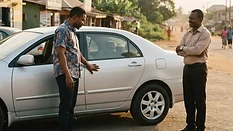

How to Verify a Car Before Buying in Asaba
A practical guide to verifying a car before buying in Asaba — confirm the vehicle's identity, VIN/chassis number, documents, seller's connection and transaction terms before you make payment.
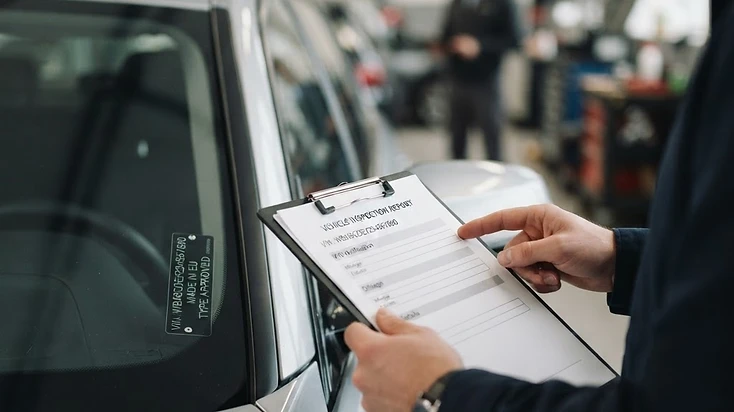
Before you pay for a car, you need to do more than like how it looks. A clean, attractive vehicle can still have the wrong identity, the wrong documents, or a seller whose connection to it is unclear. This guide explains how to verify a car before buying in Asaba, so you can decide based on evidence rather than assumption. Verification is one stage in the complete used-car buying process in Asaba; this guide covers identity, documents and seller checks, while the physical inspection is covered separately.
Before payment, your job is to establish that:
- The vehicle being presented matches its identifying information.
- The VIN/chassis information is consistent.
- The documents presented actually relate to that vehicle.
- The seller or dealer has a credible connection to the transaction.
- Material claims are checked where reasonably possible.
- Unexplained inconsistencies are resolved before money changes hands.
The core principle is simple: VERIFY BEFORE PAYMENT.
Verification reduces risk, but no single check guarantees that a vehicle or transaction is problem-free. The goal is to reduce uncertainty to a level you are comfortable with before you commit money.
1. Verification Is Different From Inspection
Verification and inspection answer different questions, and both matter.
Inspection asks: What physical or mechanical condition is this vehicle in? It covers the body, engine, interior, suspension, electrics and a road test.
Verification asks: Is this the vehicle it is represented to be, and are the identifying information, documents and transaction details consistent? It covers identity, VIN/chassis, documents, seller authority, history and payment terms.
This guide focuses on verification. For the physical and mechanical side — walking around the car, checking the engine bay, test driving and reading warning lights — see our companion article: How to Inspect a Used Car Before Buying in Asaba. Verification and inspection work together; neither replaces the other.
2. Start With the Vehicle's Identity
Before you get drawn to the paint, the interior, the wheels, the screens, the accessories or a suspiciously clean engine bay, establish the vehicle's identity first. Review:
- Make
- Model
- Model year, where reasonably established
- Trim, where relevant
- Colour
- VIN/chassis number
- Registration details, where applicable
Discrepancies should be investigated rather than automatically ignored. If the vehicle is advertised as one specification but presents as another, ask why. A seller who cannot clearly explain the difference is a reason to slow down, not to pay faster.
3. Locate and Check the VIN / Chassis Number
The VIN (vehicle identification number) or chassis number is the identifier that ties a specific vehicle to its documents and history. It is the backbone of verification.
Locate the physical identifier(s) appropriate to that vehicle and compare them carefully with the documents presented. Look for suspicious signs such as:
- Damaged identifier areas.
- Unusual alteration around the identifier plate or stamped area.
- Characters that do not match between the physical identifier and the documents.
- Inconsistent identifiers across different parts of the vehicle.
- Signs that an identification area may have been disturbed.
This is detection and verification guidance only. If you suspect tampering, do not continue the transaction on the assumption that it is harmless. Stop and obtain appropriate professional or official verification before any payment.
4. Compare the VIN With Every Relevant Document
The VIN/chassis information should be consistent across every relevant document available for the transaction. Different vehicles and transaction histories can involve different documentation, so do not assume a single universal list applies to every Nigerian vehicle. Instead, check that:
- The documents presented for the vehicle consistently identify the same vehicle.
- Names, dates and vehicle identifiers line up across documents where they appear.
- Any mismatch is explained clearly.
A mismatch is not automatically fraud, but it is a problem that requires an explanation. If the explanation is vague or changes each time you ask, treat that as a reason to verify further, not to pay quickly.
5. Verify the Seller's Connection to the Vehicle
Understand who is actually selling the vehicle. Is it the owner? A dealer? An agent acting for someone else? A person selling on behalf of a relative?
There is nothing inherently wrong with an intermediary selling a car. The problem is unexplained authority, not the existence of an intermediary. If someone is selling on another person's behalf, understand the relationship and obtain appropriate supporting evidence where necessary.
Reasonable questions to resolve before payment:
- Why is the seller the one transacting this vehicle?
- Can they show a credible connection between themselves and the vehicle or its owner?
- If they are an agent, what is the basis of their authority?
Do not accuse agents or dealers of wrongdoing. Simply make sure the seller's connection to the vehicle makes sense.
6. Review Ownership and Transaction Documents
Practical document review means reading what you are given and checking for consistency:
- Names — do they match across documents?
- Vehicle identifiers — do they match the physical vehicle?
- Dates — are they consistent and in a logical order?
- Registration information, where applicable.
- Seller information.
- Obvious alterations, corrections or overwrite marks.
- Inconsistent spellings or numbers.
- Missing pages or details where relevant.
A document that looks genuine is not the same as independently confirming it is genuine. Where the ownership, registration or customs status of a vehicle is unclear, use appropriate official or professional verification. Do not rely solely on how clean a document looks.
This guide does not provide legal certification, and it does not claim that Asaba Auto Exchange certifies documents. It describes how to ask the right questions before you pay.
7. Verify Vehicle History Where Available
Legitimate vehicle-history sources can add useful evidence. Depending on the source and the vehicle, potential information may include:
- Previous reported damage.
- Auction history.
- Recorded mileage.
- Title or ownership events.
- Recall information.
- Other recorded events.
Be clear about the limits of this information. History databases may be incomplete. A clean online history report does not prove that a vehicle is accident-free, flood-free, mechanically sound, has perfect mileage, or is legally trouble-free. It is one piece of evidence, not a guarantee.
8. Tokunbo Vehicle Verification
For foreign-used (tokunbo) vehicles, verification often focuses on:
- VIN consistency across the vehicle, documents and any available history.
- Available foreign history records.
- Auction information, where legitimately available.
- Previous damage records, where available.
- Mileage consistency.
- Document or import-related information appropriate to that transaction.
Not every tokunbo vehicle has complete foreign records, and a foreign history report may simply have no events recorded. Do not assume tokunbo automatically means cleaner or safer. Verify what is available, and treat the absence of records as just that — an absence, not proof.
9. Locally Used Vehicle Verification
For locally used vehicles, verification often focuses on:
- Registration and document consistency.
- The seller's connection to the vehicle and ownership continuity.
- VIN/chassis consistency between the vehicle and documents.
- Available maintenance evidence.
- Previous transaction history, where available.
- Outstanding questions about ownership or documentation.
Locally used vehicles are not inherently worse. The verification process is the same in spirit: confirm identity, documents, seller and history where available, and resolve inconsistencies before payment.
10. Check Whether the Mileage Claim Makes Sense
The odometer reading is a claim, and a claim should be considered alongside other evidence. Possible supporting evidence includes:
- Service records.
- History reports, where available.
- Interior wear.
- Steering-wheel, pedal and seat wear.
- Maintenance records.
But be precise about what wear can and cannot tell you: physical wear cannot conclusively prove mileage manipulation. Unusually low mileage combined with heavy wear deserves a question, and a reasonable answer should involve evidence rather than insistence.
11. Be Careful With "Accident Free" Claims
"Accident free" should not be accepted simply because it appears in an advert. Where that claim materially affects your buying decision, investigate it through:
- Physical inspection.
- History evidence, where available.
- Professional assessment.
A history report alone may not capture every repair, and a vehicle can have been repaired and re-advertised as clean. For the physical inspection side — body panel alignment, welds, overspray, underbody and structural signs — read the full used-car inspection checklist. The two guides are designed to be used together: verify identity and documents here, inspect condition there.
12. Verify Before Sending a Deposit
Paying before verification adds risk. Before you send money, make sure you understand:
- What vehicle the payment relates to.
- Who is receiving it.
- Why payment is required at this stage.
- Whether it is refundable or non-refundable.
- What happens next.
- What terms were agreed.
Clear, written transaction terms are reasonable to request where appropriate. This is not legal advice, and it does not mean all deposits are unsafe — it means a deposit should follow verification, not replace it.
13. Do Not Let Urgency Replace Verification
Pressure tactics can sound like:
- "Another buyer is coming."
- "Pay now to hold it."
- "The price changes today."
- "Send a deposit before inspection."
- "Documents will come later."
Another interested buyer may genuinely exist, and urgency itself does not prove fraud. But urgency should never force you to abandon important verification. If a seller insists that time pressure means you should skip checks, treat that insistence as a signal, not a reason to speed up.
14. Red Flags That Require More Verification
These are reasons to pause and verify further — not automatic proof of fraud:
- VIN/chassis mismatch between the vehicle and documents.
- Unclear seller authority.
- Unexplained document inconsistencies.
- Refusal to allow reasonable verification.
- Important documents promised only after payment.
- Material vehicle claims that repeatedly change.
- Pressure to skip verification.
- The seller becomes evasive when reasonable questions are asked.
- Unexplained identity inconsistencies.
- Suspicious alteration around vehicle identifiers.
When you see these, the right response is: pause the transaction and verify further. A legitimate seller can usually accommodate reasonable verification; one who cannot should be asked why. For the broader patterns of transaction risk and payment safety, see our guide to common transaction red flags.
15. Car Verification Checklist Before Payment
Screenshot or save this checklist and take it with you.
BEFORE PAYMENT
- [ ] Confirm make/model/vehicle identity
- [ ] Locate VIN/chassis identifier
- [ ] Compare VIN/chassis with documents
- [ ] Check seller/dealer identity
- [ ] Understand the seller's connection to the vehicle
- [ ] Review transaction documents
- [ ] Investigate unexplained document inconsistencies
- [ ] Check legitimate vehicle history where available
- [ ] Compare mileage claims with available evidence
- [ ] Investigate important accident-history claims
- [ ] Confirm the payment recipient
- [ ] Understand deposit/payment terms
- [ ] Complete physical/mechanical inspection separately
- [ ] Test drive where appropriate
- [ ] Resolve important unanswered questions
- [ ] Pay only when satisfied with the verification process
16. What Verification Cannot Guarantee
Verification is risk reduction, not magic. No single check — a VIN check, a history report, a document, a seller statement or a visual look — can guarantee a perfect transaction. The strongest buying decisions use several independent checks and accept that some uncertainty may remain.
This is not a reason to be paralysed. It is a reason to verify enough, inspect enough, and then decide deliberately rather than under pressure.
17. Final Recommendation
The buyer-protection process, in order:
- VERIFY THE VEHICLE.
- VERIFY THE DOCUMENTS.
- VERIFY THE SELLER AND TRANSACTION.
- INSPECT THE VEHICLE. (See the physical inspection guide.)
- THEN DECIDE WHETHER TO PAY.
If anything cannot be verified, you have the right to wait, to ask more questions, to get a second opinion, or to walk away. The principle that protects you is the one you started with:
VERIFY BEFORE PAYMENT.
And, working alongside it, the principle from our companion inspection guide:
INSPECT BEFORE PAYMENT.
When you are ready to compare vehicles, browse cars for sale in Asaba and verify the specific car in front of you before payment — a marketplace listing is not proof that a vehicle has already been verified.