
Tokunbo vs Locally Used Cars in Nigeria: Which Should You Buy?
A balanced comparison of Tokunbo and locally used cars in Nigeria — price, condition, history, maintenance and inspection factors to help you decide which is the better buy for your situation.
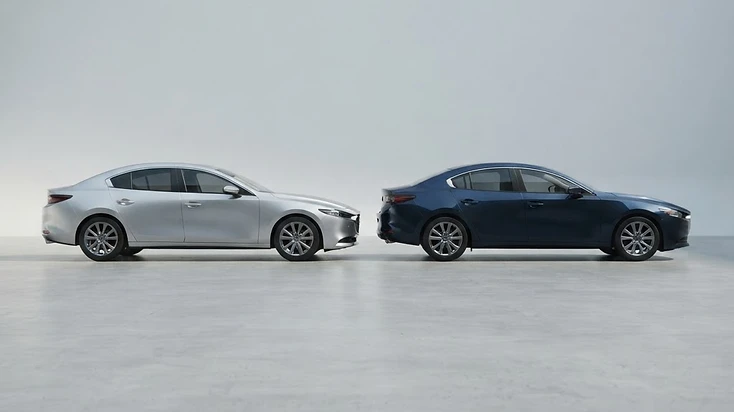
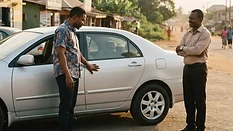
Should you spend more on a Tokunbo car or save money with a locally used vehicle? It is one of the most common questions Nigerian car buyers ask, and most people reach for the labels as a shortcut for quality: "Tokunbo is better" or "locally used is cheaper and riskier."
Those labels are useful as a starting point, but they do not tell you enough on their own. A clean, well-maintained Tokunbo vehicle can be an excellent purchase. A carefully maintained locally used vehicle can also be an excellent purchase. A neglected, damaged or misrepresented vehicle can be a poor purchase regardless of whether it is Tokunbo or locally used.
The better choice depends on actual vehicle condition, purchase price, maintenance history, available evidence, intended use, repair budget, inspection findings, verification findings and total value.
The decision principle for this guide is simple:
BUY THE CONDITION AND EVIDENCE — NOT JUST THE LABEL.
This is a comparison and purchase-decision guide. It is not a replacement for physical inspection or for document/identity verification. For those, we link to our two companion guides throughout this article.
1. What Does "Tokunbo" Mean?
In normal Nigerian usage, "Tokunbo" generally refers to a foreign-used or imported vehicle that has not previously been used locally in Nigeria the way a locally used vehicle has. It is a practical label, not a rigid legal classification, and it is used loosely in the market.
The important point is that foreign-used vehicles can have very different histories. One Tokunbo vehicle may have a good maintenance history with consistent service records. Another may have previous repairs, auction history, damage history, high mileage or limited records. The fact that a vehicle arrived from abroad does not reveal which of those histories applies.
So: TOKUNBO DOES NOT AUTOMATICALLY MEAN PERFECT. A Tokunbo car must still be inspected and verified like any other vehicle.
2. What Does "Locally Used" Mean?
A locally used vehicle has already been operated in Nigeria. Its condition can vary enormously depending on previous ownership, maintenance, the roads and routes it was driven on, repair quality, driving conditions, length of ownership, storage and service history.
A locally used vehicle is not automatically inferior. A carefully maintained locally used vehicle may be a better purchase than a poorly repaired foreign-used vehicle. The same logic applies in reverse. What matters is the specific vehicle in front of you, not the category it sits in.
3. Quick Comparison Table
This table is a general framing tool, not a verdict. Every row ultimately depends on the actual vehicle.
| Factor | Tokunbo / Foreign Used | Locally Used | |---|---|---| | Purchase price | Often different from local equivalent; varies by vehicle | Often lower; varies by vehicle | | Available history | May include overseas records where available | May include local ownership/service evidence | | Local usage history | Limited or none prior to import | Present; varies by previous owner | | Maintenance evidence | Depends on what the seller has | Depends on what the seller has | | Physical condition | Varies by vehicle | Varies by vehicle | | Mileage evidence | Treat as one piece of evidence | Treat as one piece of evidence | | Previous repairs | Possible; investigate | Possible; investigate | | Immediate maintenance needs | Budget based on inspection | Budget based on inspection | | Inspection importance | Essential | Essential | | Verification importance | Essential | Essential | | Choice available | Wider for some makes/models | Wider for some makes/models | | Value potential | Depends on condition and price | Depends on condition and price |
If a single row says "varies by vehicle," that is the honest answer. The label alone does not decide any of these factors.
4. Purchase Price
Tokunbo vehicles often command different asking prices than locally used equivalents, but actual pricing depends on make, model, year, trim, condition, mileage, the exchange and import environment, the seller, market demand and documentation. There is no fixed "Tokunbo premium" that applies to every car.
Lower purchase price does not automatically equal better value. A cheaper vehicle that needs major work can cost more in total than a more expensive vehicle that is genuinely clean. The right question is not "which is cheaper?" but "which represents better total value once condition, evidence and likely repairs are considered?"
We do not publish current price figures here because vehicle prices move with the market and with each specific vehicle's condition. Compare actual asking prices for actual vehicles.
5. Condition Matters More Than the Label
This is the core of the comparison.
A locally used vehicle with consistent maintenance and good condition can outperform a neglected foreign-used example. A clean foreign-used vehicle with strong evidence may justify a different purchase decision. Buyers should compare actual vehicles, not stereotypes. The Tokunbo-versus-locally-used choice is only one factor in the complete used-car buying process in Asaba; condition, evidence and price matter more than the label alone.
Imagine two cars of the same make and model. The locally used one has full service records, a clean interior, consistent oil changes and a recent suspension refresh. The Tokunbo one looks clean but has no records, unclear history and signs of previous panel work. In that scenario the locally used vehicle may be the stronger buy — even though it carries the "less desirable" label.
The reverse is equally possible. The point is not to favour either category. The point is to compare the individual vehicles using condition and evidence.
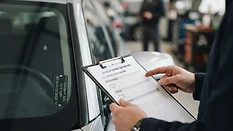
For the physical side — body panels, engine bay, interior, suspension, electrics and a road test — see our companion guide: How to Inspect a Used Car Before Buying in Asaba. We do not reproduce that inspection process here.
6. Maintenance History
Maintenance evidence is one of the most useful things a seller can offer. Possible evidence includes service receipts, maintenance records, repair invoices, owner explanations and workshop records where available.
Two cautions:
- The absence of paperwork does not automatically prove neglect. A careful owner may simply not have kept receipts.
- Paperwork itself does not guarantee condition. A vehicle can have a neat service book and still have hidden problems.
Evidence must be considered alongside inspection, not instead of it. A service record tells you what was done; a physical inspection tells you what the vehicle actually is today.
7. Mileage: Do Not Trust the Number Alone
Displayed mileage should be treated as one piece of evidence, not a verdict on value. Possible supporting evidence includes history records, service records, interior wear and maintenance documentation.
We do not teach odometer manipulation, and we do not claim that physical wear proves mileage tampering. What we do say is this: unusually low mileage combined with heavy wear deserves a question, and a reasonable answer should involve evidence rather than insistence. High mileage is not automatically disqualifying either — a well-maintained high-mileage vehicle can be a better buy than a poorly-maintained low-mileage one.
For verifying the mileage claim, the VIN, the chassis number and the documents, see our companion guide: How to Verify a Car Before Buying in Asaba.
8. Accident and Repair History
Both Tokunbo and locally used vehicles can have previous damage or repairs. It is a mistake to imply that Tokunbo means accident-free or that locally used means accident-damaged. Neither is true as a rule.
When evaluating a vehicle, consider repair quality, structural concerns, available history and physical evidence. Signs of poor repair — uneven panel gaps, inconsistent paint, welding where there should be none, or underbody damage — deserve investigation regardless of the vehicle's origin.
For the physical inspection side of this question, read How to Inspect a Used Car Before Buying in Asaba rather than relying on the label to answer it for you.
9. Vehicle History and Document Verification
Available history differs between vehicles. Foreign-used vehicles may sometimes have overseas history information through legitimate vehicle-history sources. Locally used vehicles may have local ownership, maintenance and document evidence. Neither category guarantees complete records.
A clean online history report does not prove that a vehicle is accident-free, flood-free, mechanically sound or legally trouble-free. It is supporting evidence, not absolute proof. Use it to reduce uncertainty, then verify the rest.
For the full verification process — VIN/chassis consistency, document review, seller authority and history checks — see How to Verify a Car Before Buying in Asaba.
10. Nigerian Road and Usage Conditions
Locally used vehicles have experienced Nigerian road, traffic, weather and usage conditions. It would be misleading to pretend this never matters — road conditions can affect suspension, tyres, alignment and underbody over time. But it would be equally misleading to treat rough roads as an automatic destruction sentence for every locally used vehicle.
Actual impact depends heavily on where the vehicle was driven, how it was driven, maintenance, suspension upkeep, tyres and previous owner behaviour. A locally used vehicle driven mostly on good roads and properly maintained may remain in very good condition. A locally used vehicle abused on rough roads with no maintenance may be in poor shape. The category tells you the environment existed; the inspection tells you the result.
11. Parts and Maintenance Costs
Parts availability and maintenance costs depend far more on the make, model, engine, trim, technology, parts availability and mechanic expertise than on whether the vehicle is Tokunbo or locally used. A common model with widely available parts and knowledgeable mechanics is usually cheaper to keep running than a rare model regardless of its origin.
This is why comparing by label is misleading for running costs. Compare by model instead: ask which vehicle has accessible parts, reasonable service costs and mechanics who know it. That question matters more than the import history.
12. Immediate Repairs After Purchase
Either category may need work after purchase. Possible examples include fluids, filters, tyres, battery, brakes, suspension components and routine servicing. We are not telling you that any specific vehicle needs these — only that post-purchase maintenance is normal and should be planned for.
The right approach is to budget for post-purchase maintenance based on inspection findings, not on assumptions about Tokunbo or locally used. An inspection that flags worn tyres or old fluids gives you a real list to price. A label gives you none of that.
13. Resale Value
Resale can depend on brand and model demand, condition, maintenance, documentation, mileage, market conditions and buyer perception. We do not publish resale percentages because resale is vehicle-specific and market-specific.
The Tokunbo/local classification may influence buyer perception at resale time, but condition and market demand remain the stronger drivers. A well-maintained locally used vehicle from a desirable model may hold value better than a rough Tokunbo example of an unpopular model. Do not let the label do the thinking for you on resale.
14. When Tokunbo May Make More Sense
A Tokunbo vehicle may make more sense when:
- The buyer has the budget for the specific vehicle.
- Condition is strong.
- Available history supports the seller's claims.
- Inspection results are satisfactory.
- Documentation is satisfactory.
- The buyer values the particular vehicle's condition or options.
This is conditional language, not a guarantee. We are not saying Tokunbo is always safer — only that, for a specific vehicle that passes these checks, it can be a sound choice.
15. When Locally Used May Make More Sense
A locally used vehicle may make more sense when:
- The purchase budget is tighter.
- The specific vehicle has been properly maintained.
- Maintenance and ownership evidence is credible.
- Condition is satisfactory.
- The buyer can inspect thoroughly before purchase.
- The price appropriately reflects condition.
Do not frame this as the "cheap bad option." A strong locally used vehicle is a legitimate, sensible purchase — not a compromise you should feel forced to apologise for.
16. When You Should Walk Away From Either
Some situations call for walking away regardless of category:
- Unresolved VIN or document inconsistencies.
- Serious structural concerns.
- Major undisclosed problems.
- The seller refuses reasonable inspection.
- Material claims repeatedly change.
- Important questions remain unanswered.
- Transaction pressure prevents verification.
- The vehicle's condition does not justify the asking price.
Not every issue is fraud. A mismatch can have an innocent explanation. But the right response to unresolved concerns is the same in every case:
PAUSE, VERIFY, INSPECT, AND DECIDE.
17. Tokunbo vs Locally Used Decision Checklist
Screenshot or save this checklist and take it with you.
BEFORE CHOOSING
- [ ] Compare actual condition
- [ ] Compare asking price
- [ ] Review maintenance evidence
- [ ] Consider available vehicle history
- [ ] Check VIN/chassis and documents
- [ ] Compare mileage evidence
- [ ] Inspect previous repairs
- [ ] Estimate immediate maintenance needs
- [ ] Consider parts availability
- [ ] Consider model-specific maintenance costs
- [ ] Test drive where appropriate
- [ ] Get an independent inspection where appropriate
- [ ] Resolve important unanswered questions
- [ ] Compare total value — not only purchase price
- [ ] Decide based on evidence, not the Tokunbo/local label
18. Example Decision Scenarios
These are hypothetical examples only, clearly labelled as such. They are not real inventory, real prices or real mileage.
Example A — The buyer chooses the more expensive Tokunbo vehicle.
Its condition, available history and inspection results justify the difference in price. The buyer pays more and receives a vehicle with stronger evidence and fewer immediate repair needs.
Example B — The buyer chooses the locally used vehicle.
It has credible maintenance evidence, strong condition and better overall value once price and likely repairs are considered. The buyer pays less and still gets a sound vehicle.
Example C — The buyer rejects both vehicles.
Neither survives proper inspection and verification. One has undisclosed structural repair signs; the other has unresolved document inconsistencies. The buyer walks away and keeps looking.
None of these is the "right" answer in general. Each is the right answer for that specific comparison.
19. How to Compare Two Actual Cars
When you are down to two specific vehicles, use a simple comparison framework. Compare them across:
- Purchase price
- Physical condition
- Mechanical condition
- Maintenance evidence
- History evidence
- Documentation
- Immediate repair budget
- Parts and service practicality
- Personal needs (family size, fuel, daily distance, terrain)
- Overall confidence
This is a practical comparison, not a proprietary scoring system. Write it down. A side-by-side list forces you to compare the actual cars rather than the labels attached to them.
20. Final Recommendation
To answer the title directly: there is no universal winner between Tokunbo and locally used cars in Nigeria.
A strong Tokunbo vehicle can be a better purchase than a poor locally used vehicle. A strong locally used vehicle can be a better purchase than a poor Tokunbo vehicle. The smartest buyer compares the individual vehicles using condition, evidence, price and intended use.
The principle holds from start to finish:
BUY THE CONDITION AND EVIDENCE — NOT JUST THE LABEL.
Then, before any money moves:
VERIFY BEFORE PAYMENT.
INSPECT BEFORE PAYMENT.
When you are ready to compare actual vehicles, browse available cars and request an inspection on any vehicle you are serious about. Do not assume a vehicle is verified simply because it is listed — verify and inspect the specific car in front of you.